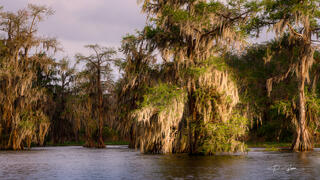
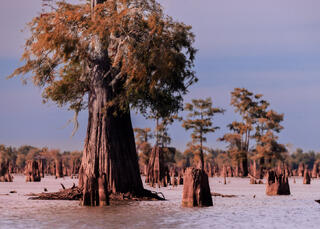
Spring Awakens in the Atchafalaya Basin
It’s still winter in much of Colorado, and the state is reluctant to release its grip, so the warmth of Louisiana feels like an exhale for me; a much needed reprieve. After time my first tour on Lake Martin, I carved out a few days to visit other areas—first exploring Lake Fausse Point, then down to Lake Chicot and over to Avery Island. But it was the unexpected early morning detour to a quiet inlet off Bayou Teche that held my attention.
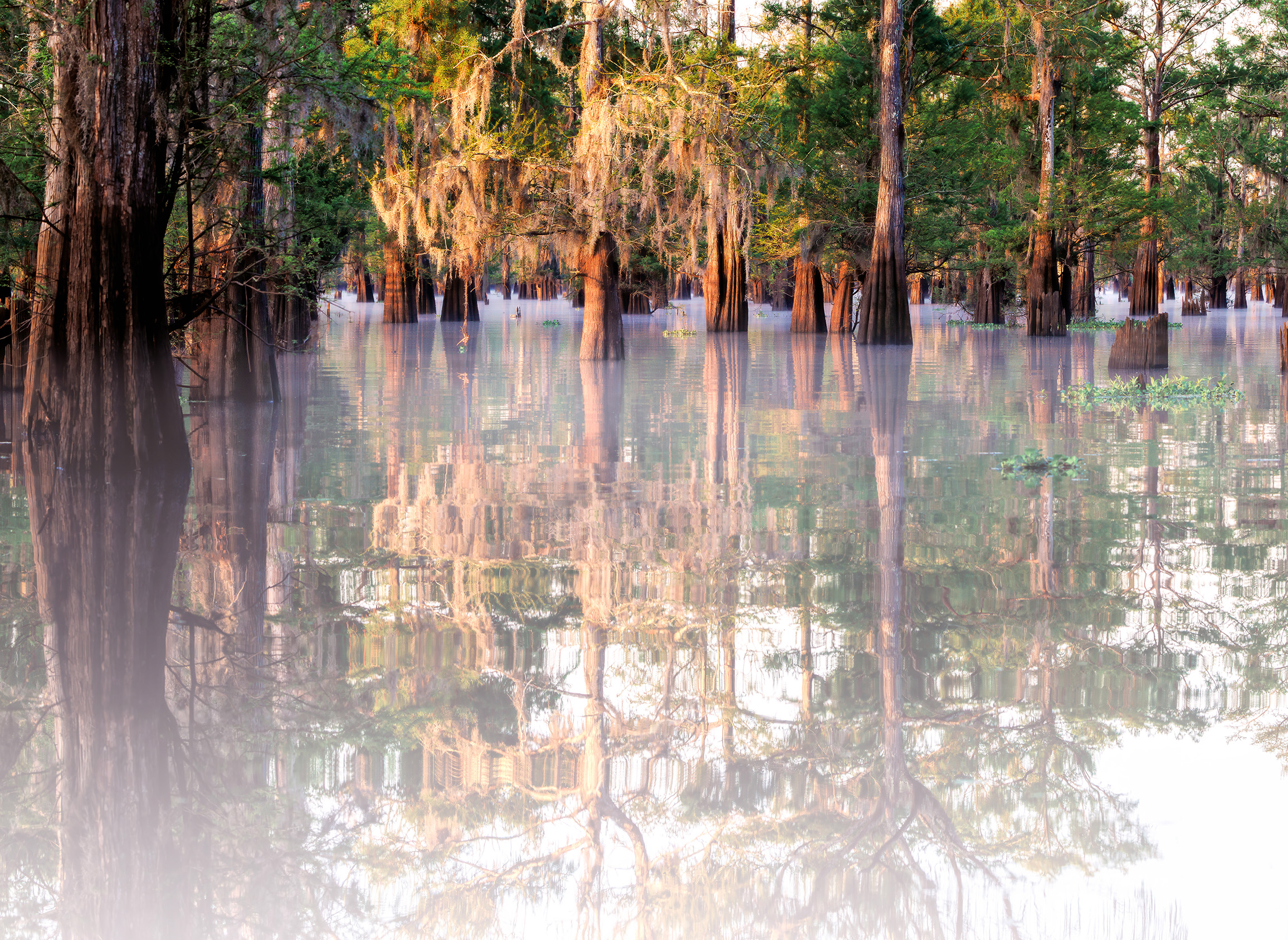
Still, mirrored waters and, a morning sunrise on the Atchafalaya River. Photo © copyright by Darlene Sours.
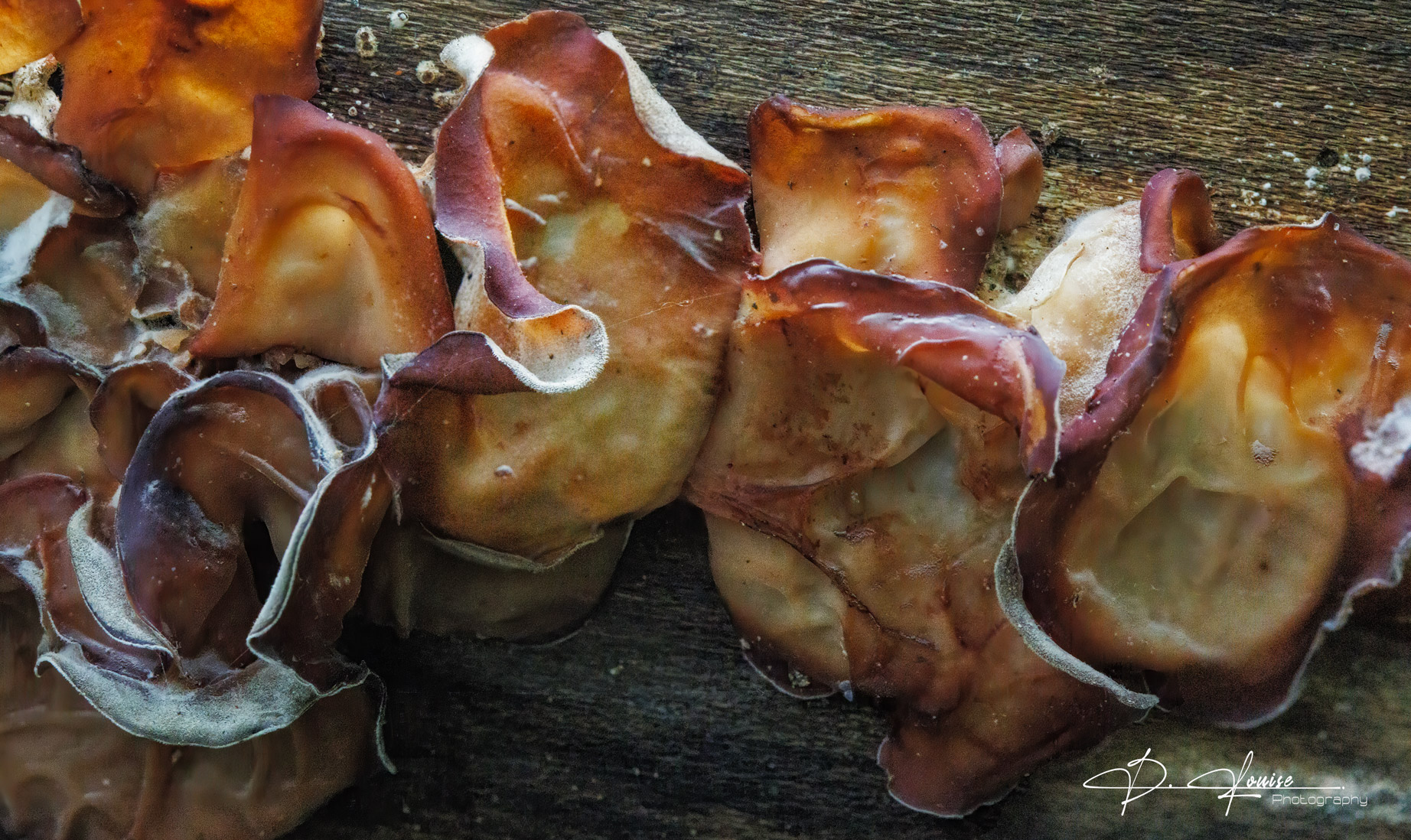
Wood eared mushrroms on a wet log in Bayou Teche. Photo © copyright by Darlene Sours.
I was the only person out there at Bayou Teche, and in this particular hiking area the air was cool and heavy with dew. It layed in the air and you could see it hovering, but only for a few minutes before it was gone. A short hike turned into hours spent crouched low in the undergrowth. Dew-spun spiderwebs shimmered with the light, mushrooms pushed through decaying nurse logs, and waterlogged stumps hosted small, thriving ecosystems. Ferns and palmettos arched overhead, letting in only the thinnest strands of morning light. It was dark, quiet, and atmospheric.
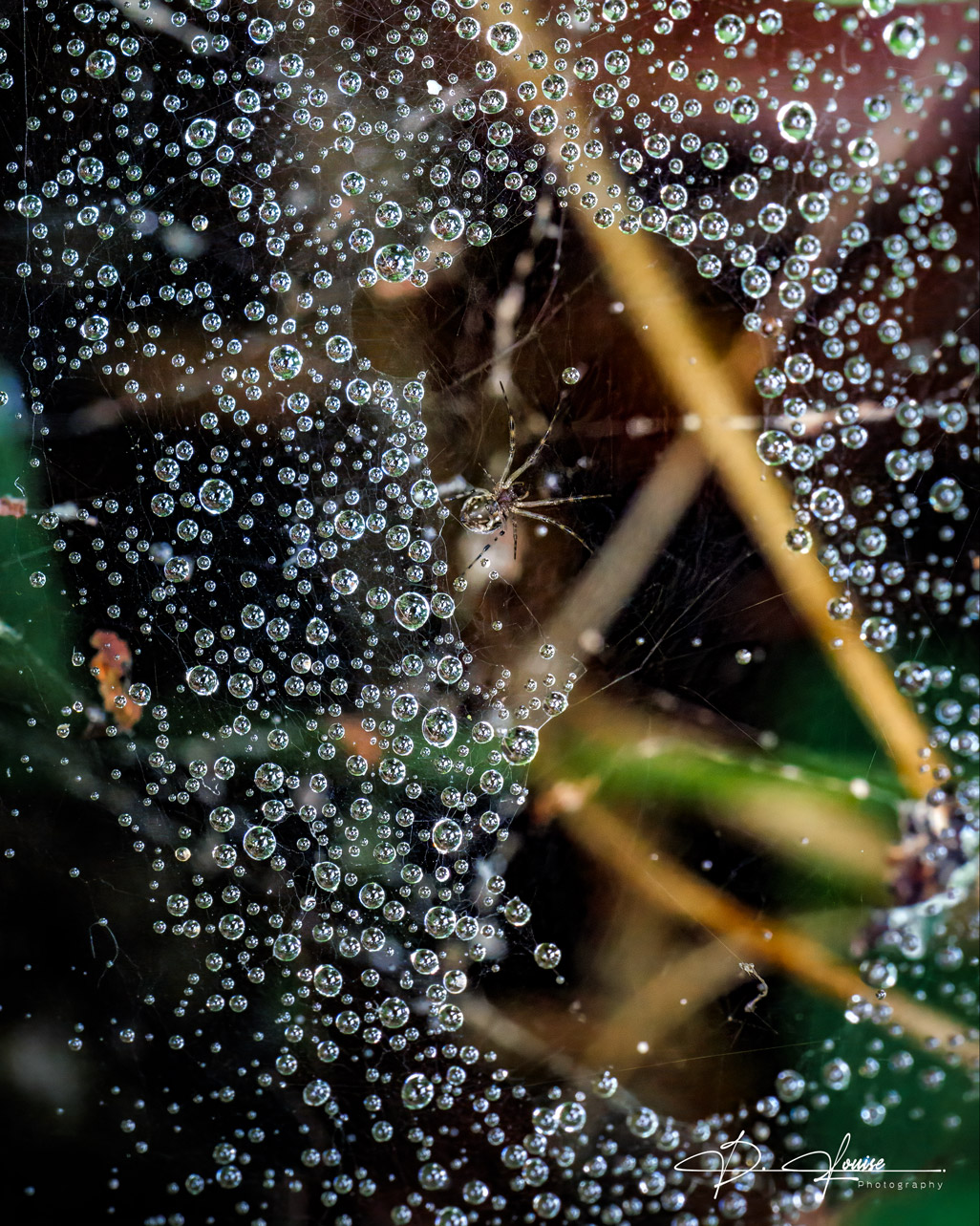
Early morning dew lays on top of a ground web and its resident spider. Photo © copyright by Darlene Sours.
For the next few days, I was wrapped in the lush, humid world of the Deep South—marveling at the grand Southern live oaks, their branches sprawling wide like arms in welcome. Birds were everywhere: in flight, in song, in sudden bursts from the trees. It was a sensory immersion in the best way. After moving west from Virginia, I remember just becoming consumed by alpine vistas, red desert dirt and vast expanses of wilderness as far as you can see. But I am a child of the south. Many of the summers of my youth were spent in southern Georgia where my Grandmother lived. Sometimes it's like going home, as the similarities reveal themselves on occasion.
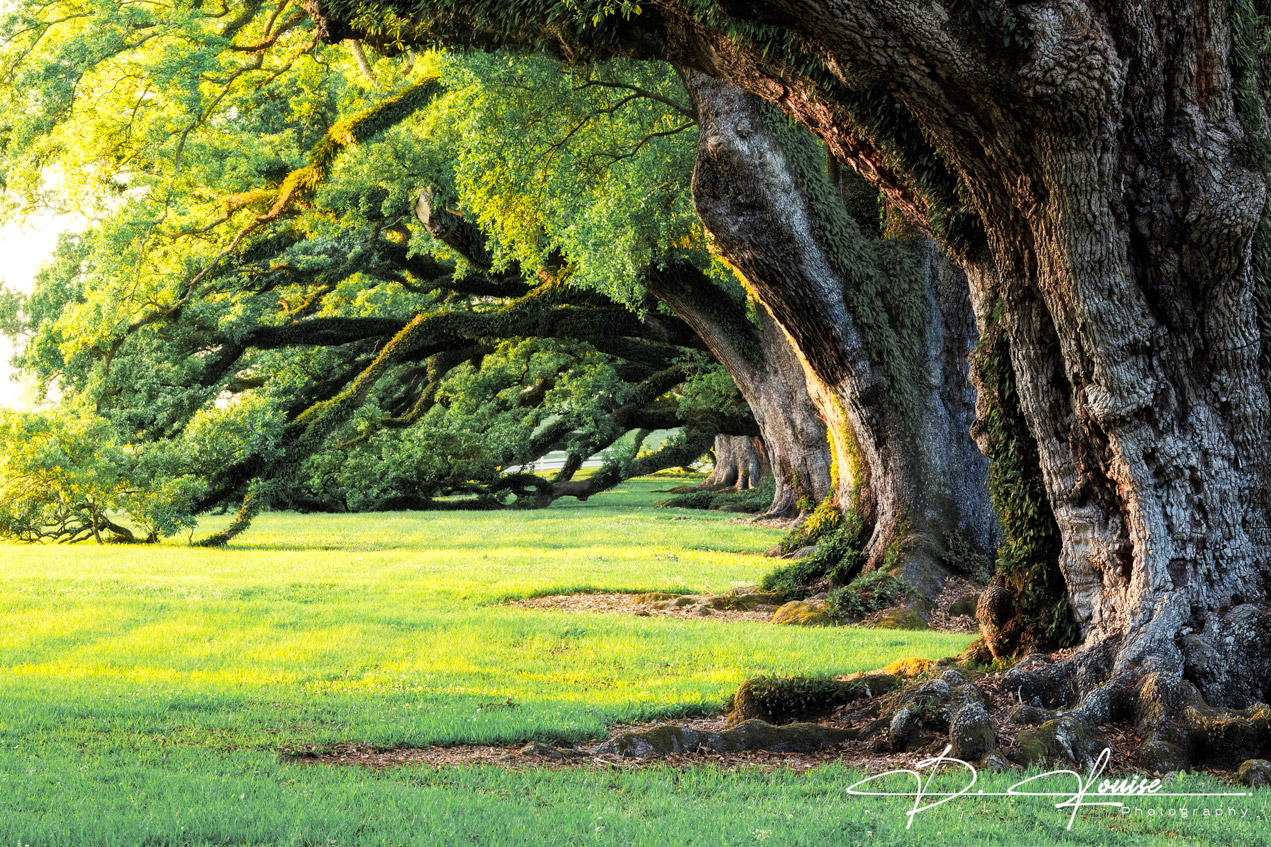
Beautiful live oaks in Louisiana. A prominent and historical fixture in the landscape here. Photo © copyright by Darlene Sours.
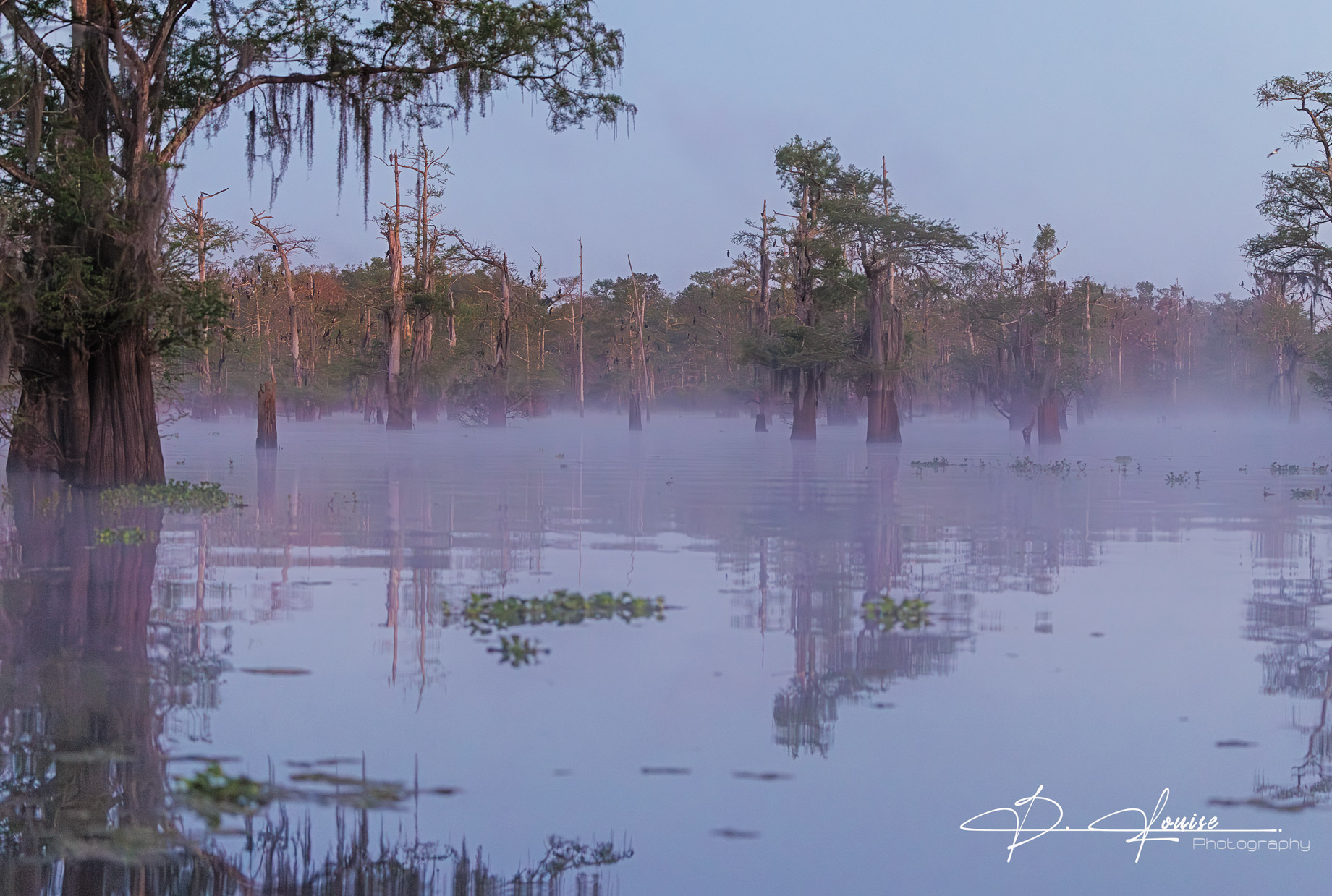
Hundreds of birds settle in the cypress trees as the sun starts to rise. Photo © copyright by Darlene Sours.
6 am and an early morning start to catch that river fog burn-off. As a photographer, I often chase light. Many imagine a bright sunny day is ideal for photography, but it’s the diffused, moody light that reveals the real magic. Foggy mornings on the river or a lake are one of those sacred moments. The fog on this day was so thick it made the drive to the boat landing feel otherworldly. But by the time we got out on the water, you could see it starting to lift.
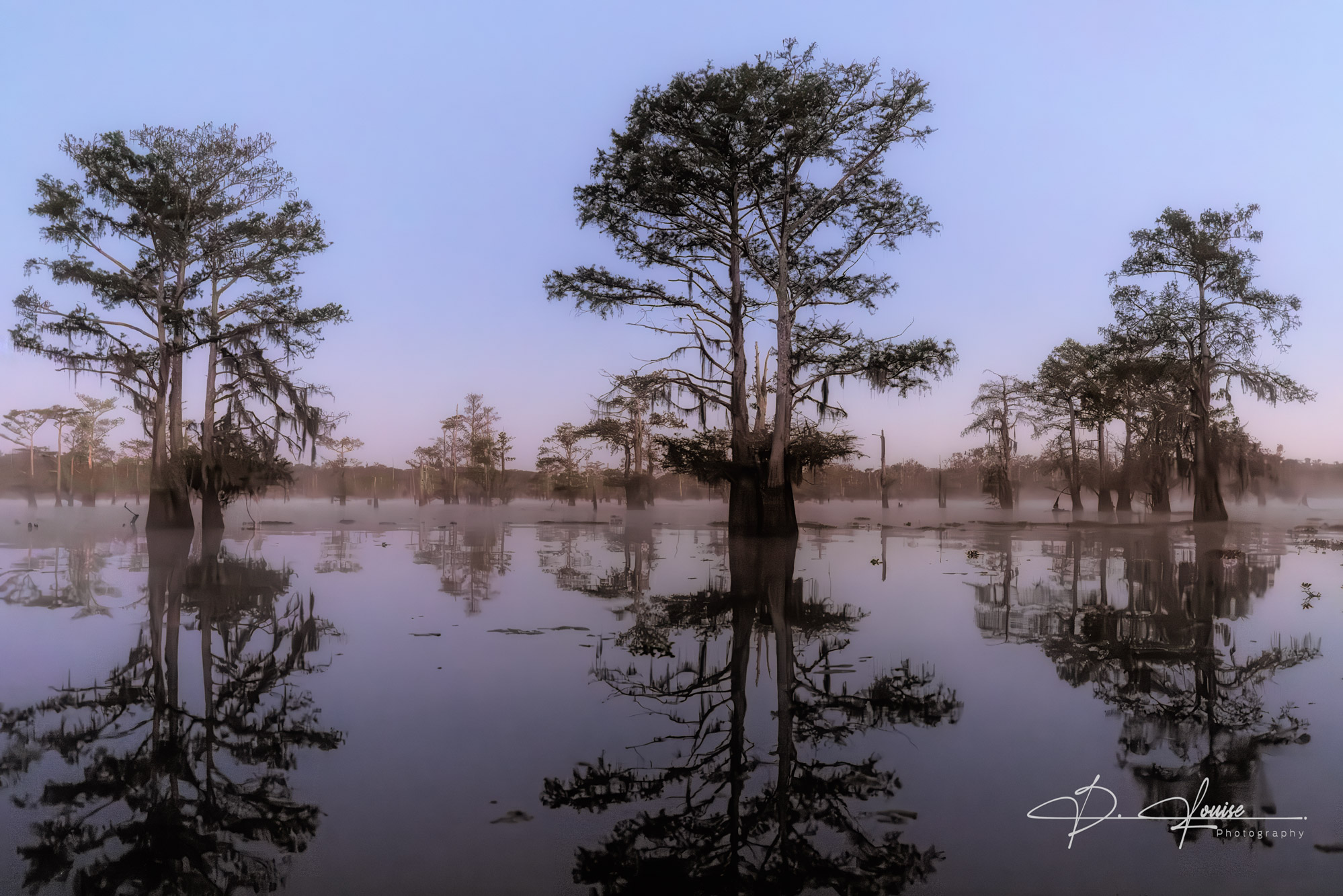
The early morning glow of the first light of day on the Atchafalaya River. Photo © copyright by Darlene Sours.
Soft and milky white, the water’s surface was draped and tinged with pink by the rising sun. The glow was unreal—gentle, delicate, perfect. As we rounded a bend behind a stand of cypress, the landscape opened up, and birds began to appear. Everywhere. Perched, flying, calling, darting. It was an explosion of life.
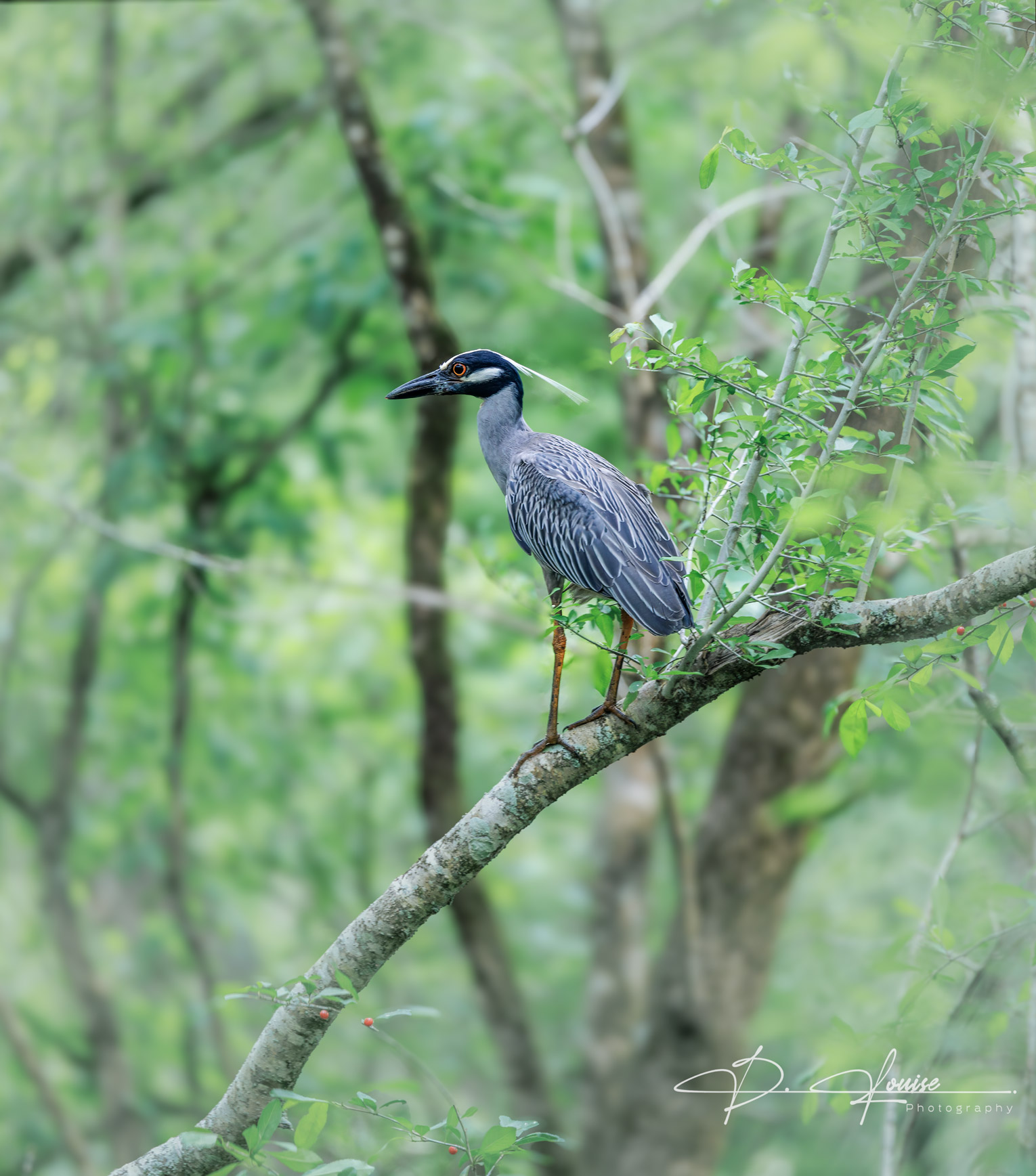
A night Heron seen in the thick green, Louisiana forest. Photo © copyright by Darlene Sours.
As the fog dissolved, the bayou transformed. Gold filtered through the trees, the greens sharpened, and the black water mirrored it all. We headed farther down Bayou Benoit in search of Bald Eagles. Ronnie, my guide, knew exactly where to go. And there they were—perched on bare branches, some nesting, others gliding with wide, powerful wings. We floated silently, and I lifted my camera slowly, quietly. Just watching was enough.
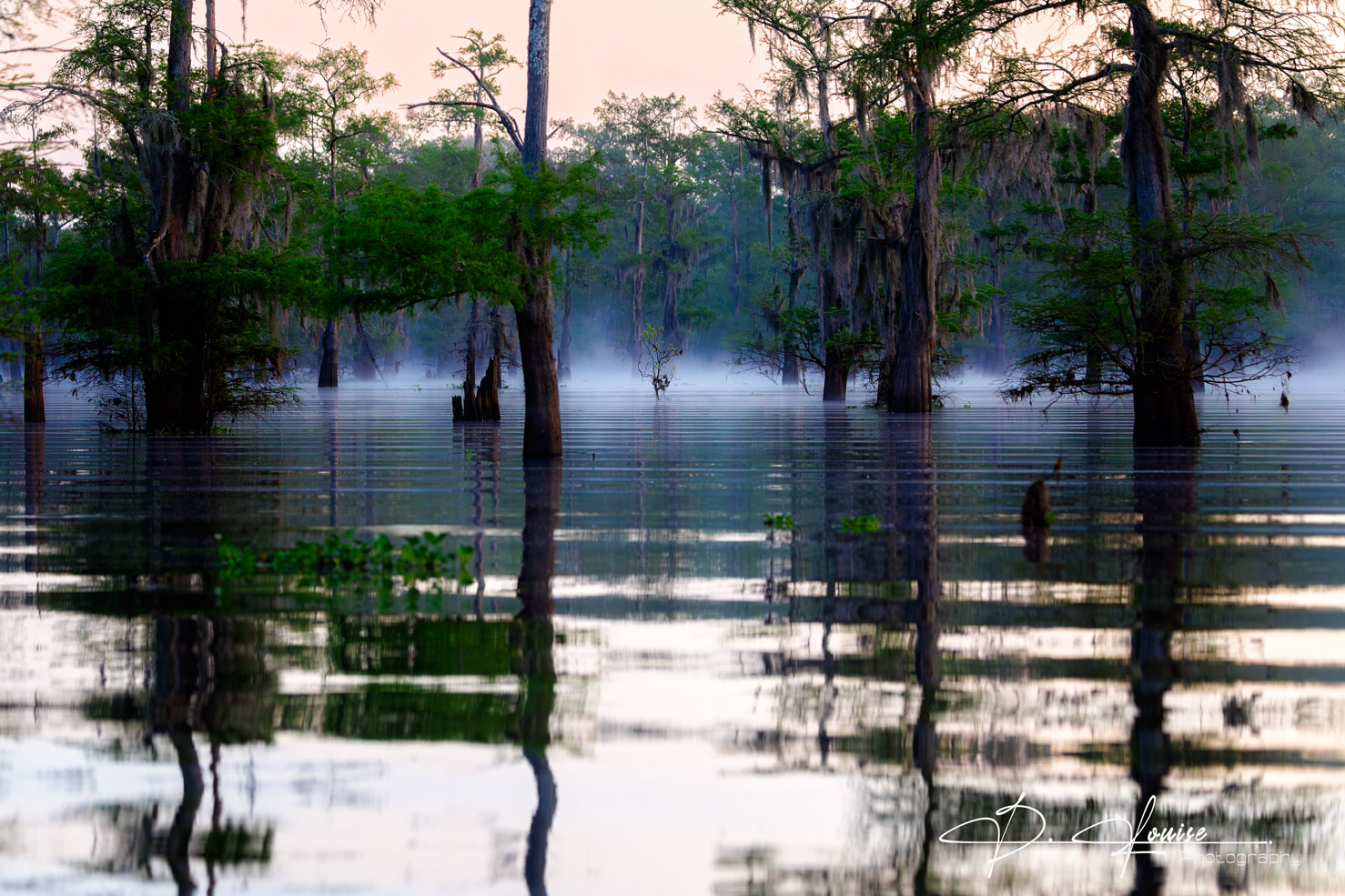
Layers of fog start to burn off as the air begins to warm up in the Atchafalaya River. Photo © copyright by Darlene Sours.
Later, we explored tributaries and narrower channels. The water level here is high this time of year, thanks to northern snowmelt and spring rains. April is one of the best times to explore. The water is high enough, but not too high. The dense greenery and blackwater passageways evoke a cinematic feel, blending beauty and mystery.
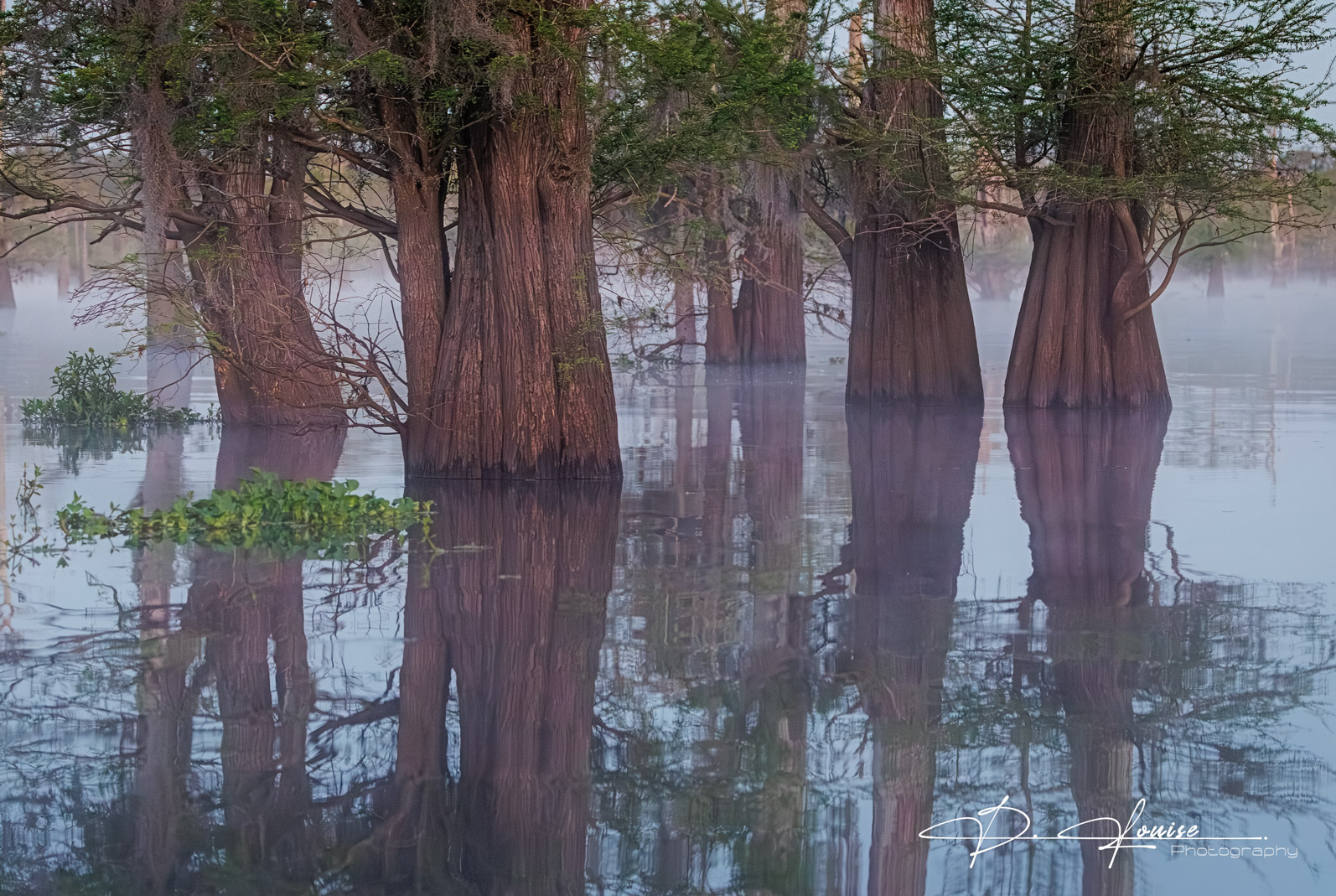
Red trunks of the Louisiana cypress trees. Photo © copyright by Darlene Sours.
Having been here in both fall and spring, I’ve seen how the seasons reveal different layers of this place. Fall strips back the foliage, exposing more of the birds and wildlife, especially in the quiet evening hours. It’s slower, more tranquil, maybe even a little haunting. Spring, on the other hand, is alive. The forest pulses with new life. You need sharp eyes to keep up with the movement in the trees. Everything feels urgent, awake, purposeful. Autumn was a slower pace. You could see and feel things slowing down. Fewer boats and people, maybe that meant more wildlife, too. Seeing the river come to life in April was truly magical. I have never seen a more vibrant shade of green. In this video, you get a true sense of springtime in Louisiana.
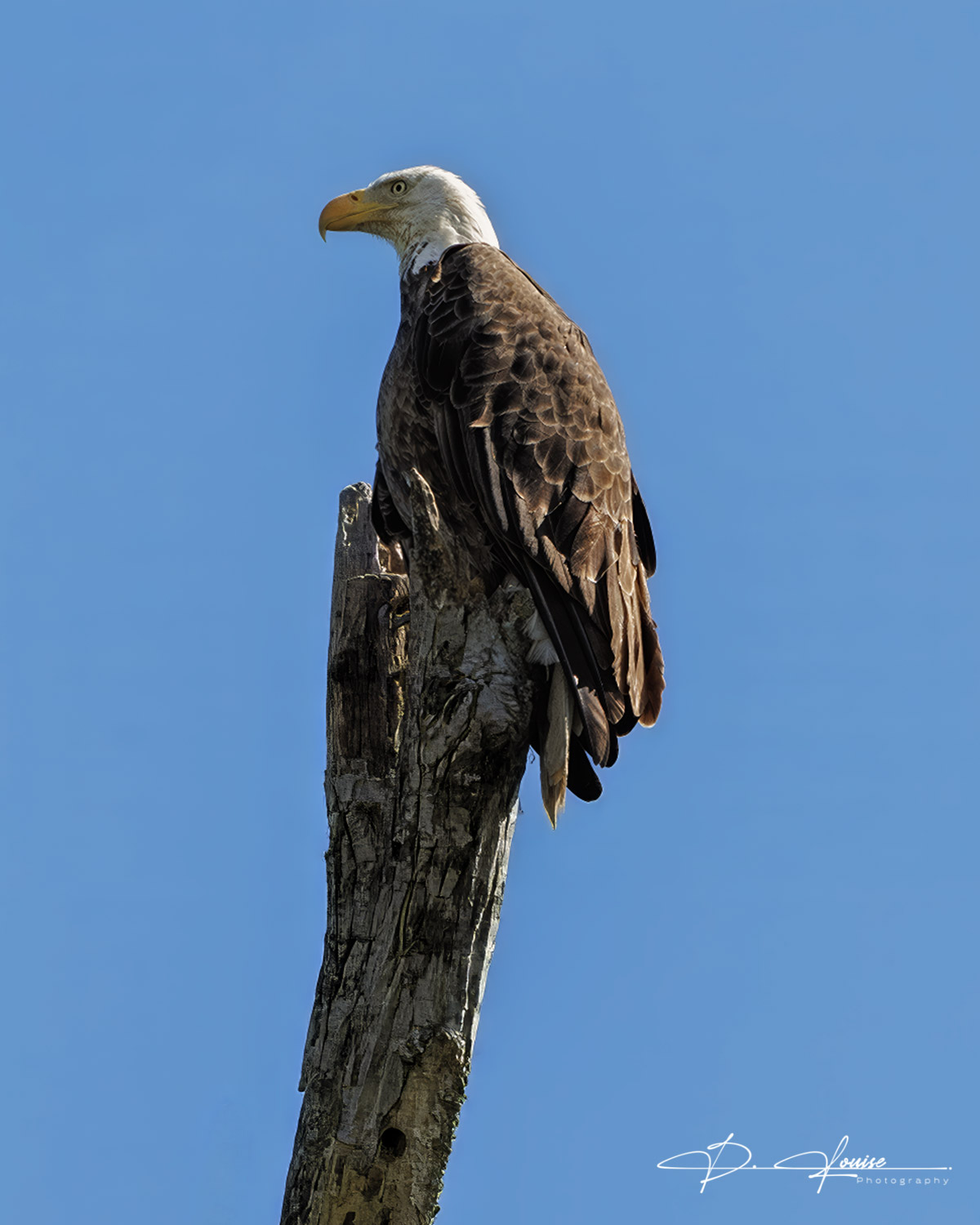
An American Bald Eagle perched on top of a stump, looking for the next meal. Photo © copyright by Darlene Sours.
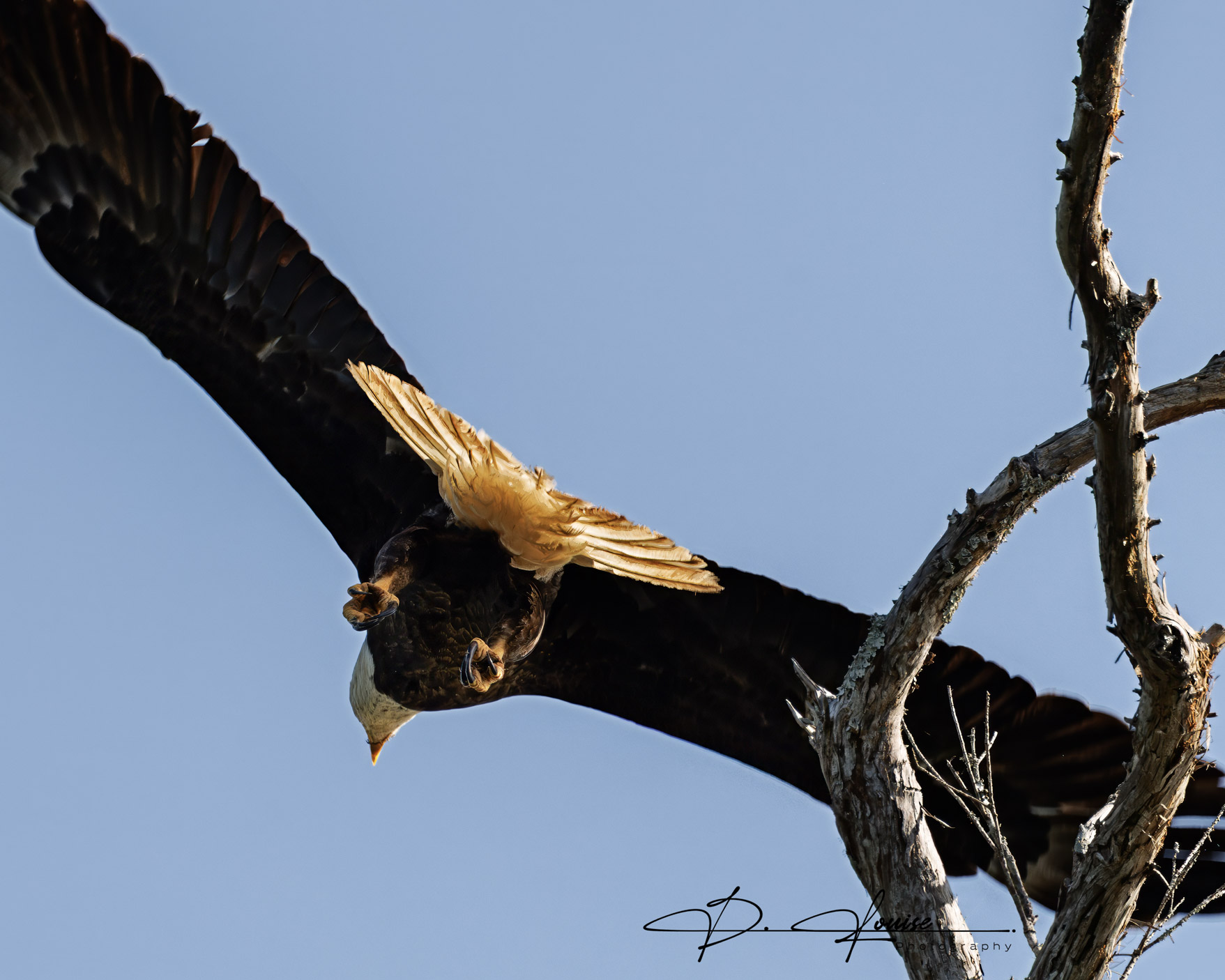
The span of a Bald Eagle taking off. Photo © copyright by Darlene Sours.
The contrast between seasons keeps calling me back. That—and the surprises. What bird will capture my attention next time, the way the Anhinga did? What beautiful plant will bloom across the water, only for me to learn it’s invasive, like the water hyacinth? There are many birds, but also mammals as well; Bobcats, deer black bears, foxes, beavers and mink I still hope to see them all there in there habitat.
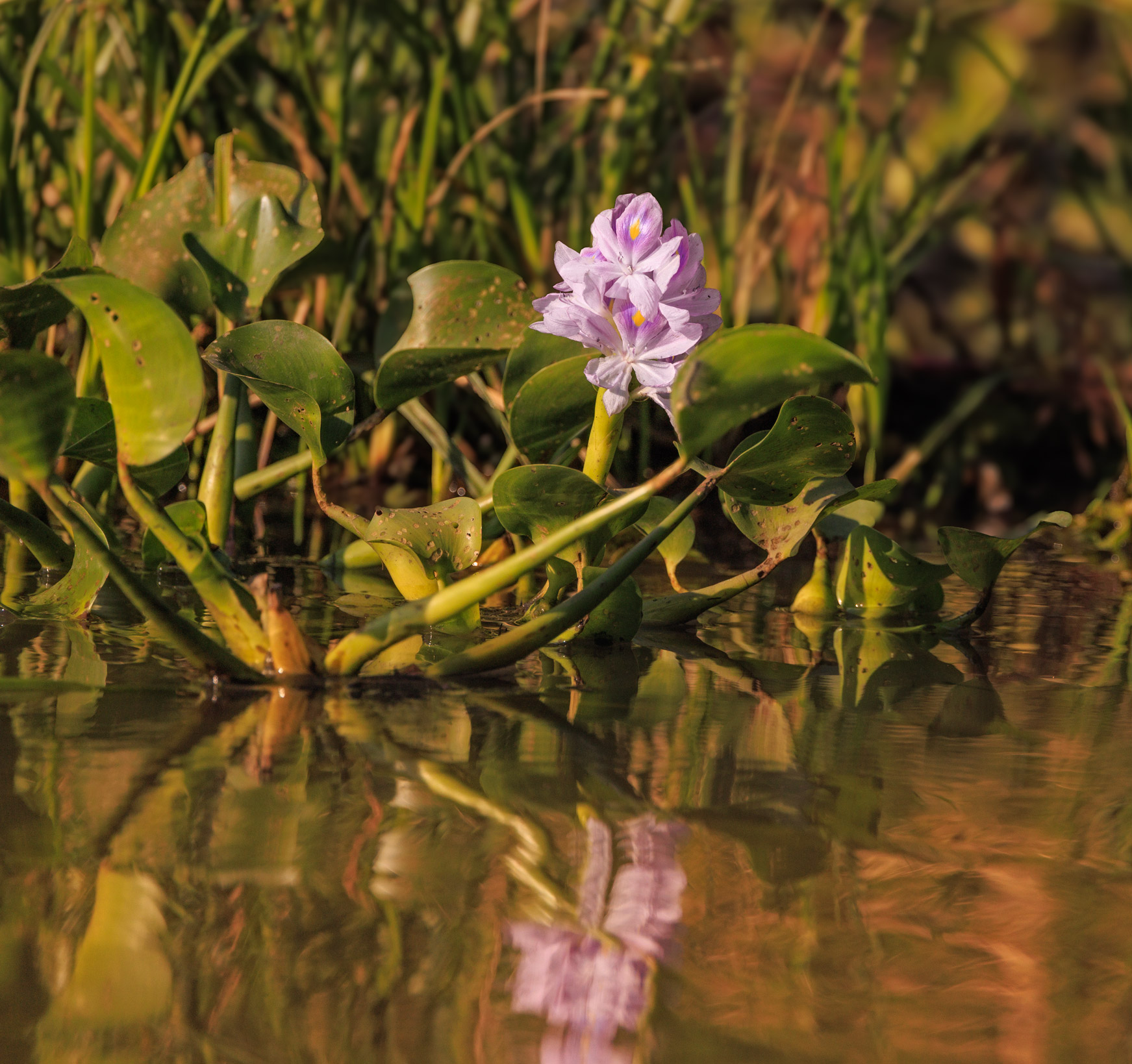
Water Hyacinth is beautiful in its blooms, but also an Invasive species on the river. Photo © copyright by Darlene Sours.
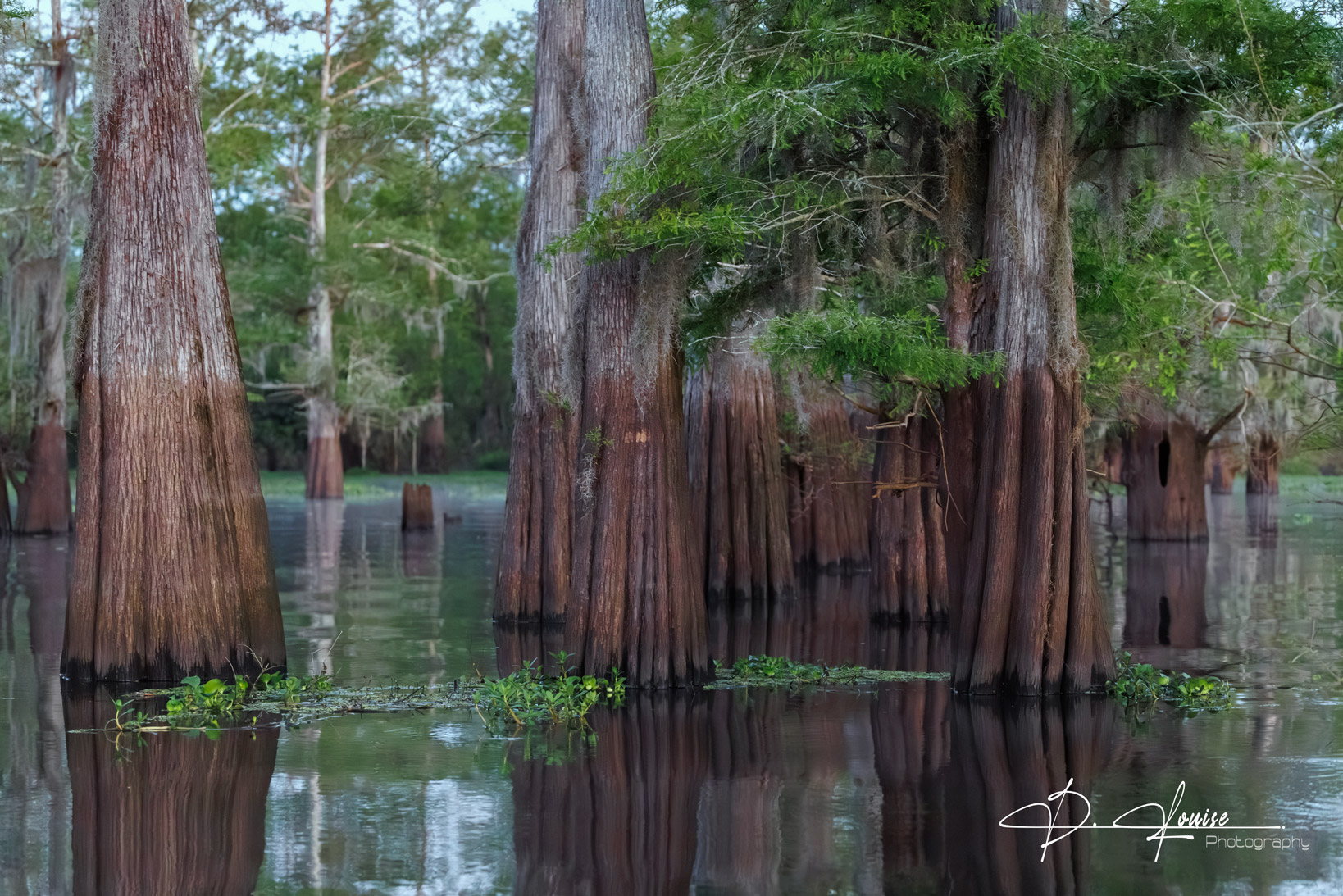
The high water line can be seen here on the Red trunks of these trees. Photo © copyright by Darlene Sours.
Whenever I leave, my thoughts immediately turn to coming back. When I am home, in that grander landscape, it often takes time to reach a place where wildlife are comfortable enough in their space to be willing to share it. However, they are mostly skittish and elusive, which is also a good thing. Here, they are all around, busy and not paying attention to you. Being in a boat helps with that, as it is easier to keep your distance and enjoy the show.
This place continues to surprise and humble me. The closest comparison I can make is the first time I saw the Rocky Mountains after leaving Virginia. Louisiana of course doesn’t have towering peaks, but it has its own quiet majesty. There’s a wildness here like in Colorado—thick, protective, and rich with life. And in that, I feel something just as grand. Until next time Louisiana.